


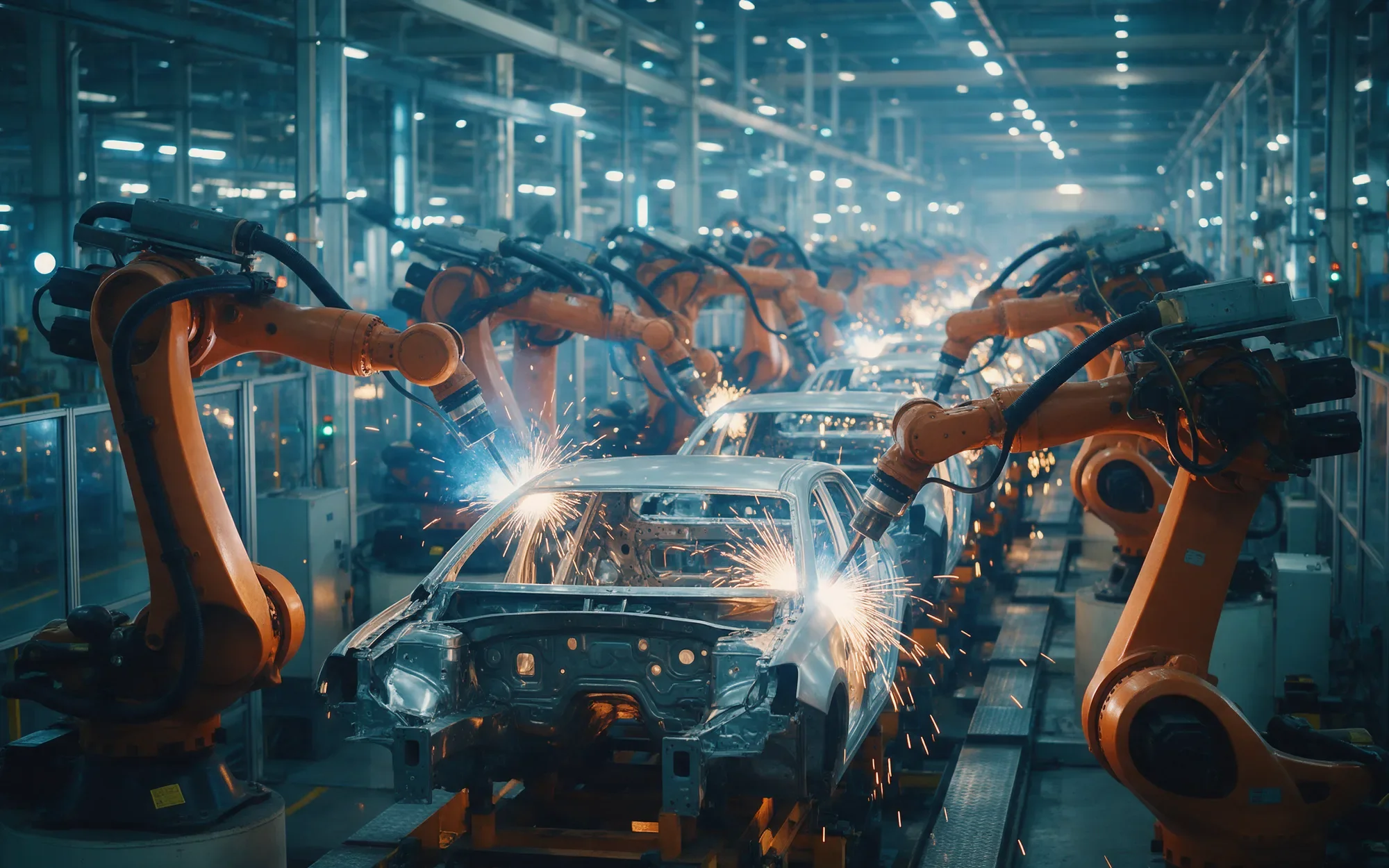
Walk onto the floor of a modern Indian car plant and you will see what robots have been doing for decades: welding body panels, painting shells and lifting heavy assemblies into place. Walk into a mid-sized electronics or textile factory and, until recently, you would have seen very few. That is the gap now closing, and it may matter more for India's manufacturing ambitions than any single giant investment.
A combination of cheaper hardware, easier programming and pressure from global buyers is pushing robotics out of a handful of large plants and into thousands of smaller ones. The machines arriving are often different from the caged industrial arms of the past: collaborative robots that work alongside people, autonomous carts that move materials, and vision systems that inspect products faster than the human eye.
Why now
Three trends have converged. The first is price. Collaborative robots that once cost as much as a small factory's annual profit are now within reach of businesses that would never have considered automation. The second is software. Many new systems can be taught a task by demonstration or configured through a tablet, removing the need for specialised programmers. The third is demand. Global brands sourcing from India expect consistent quality, traceability and delivery schedules that are hard to meet with manual processes alone.
“Our buyers did not ask us to automate. They asked for zero defects and on-time shipments. Robots turned out to be the only way to promise both.” — Farhan Siddiqui, managing director of an auto-components supplier (fictional, for this demo)
Not replacing, re-arranging
The fear that robots will empty factory floors runs deep in a country that needs millions of new jobs every year. What we saw on visits to plants in Pune, Chennai and Ahmedabad was more nuanced. Robots took over tasks that were repetitive, dangerous or physically punishing: loading presses, palletising heavy boxes, applying adhesives with fumes. Workers moved to inspection, maintenance, machine tending and coordination.
That shift is not automatic, and not every worker makes it. Plants that handled the change well invested in training, often with help from equipment vendors or industrial training institutes, and involved floor staff early in deciding which tasks to automate. Plants that bought robots without that groundwork reported low utilisation and frustrated teams.
The skills pipeline
Demand for technicians who can maintain and reprogram robots is outstripping supply. Several states have launched training programmes with manufacturers, and some vocational institutes have updated curricula to include robotics and industrial networking. The challenge is scale: thousands of small factories need a few skilled people each, and they compete with larger firms that pay more.
From automation to AI factories
The more ambitious plants are going beyond individual robots toward connected production lines, sometimes described as AI factories. Sensors on machines feed data to software that predicts breakdowns before they happen, adjusts settings to reduce waste and schedules production around orders and supply delays.
Computer vision is one of the most practical entry points. A camera and a trained model can inspect every part on a line rather than a sample, catching defects that would otherwise reach customers. Several Indian startups now sell inspection systems tuned to local industries, from castings and forgings to garments and pharmaceuticals.
What holds it back
Cost is still a barrier for the smallest firms, especially when credit is expensive. Many factory owners are wary of investments that take several years to pay back. Equipment leasing and pay-per-use models are beginning to help, but they are not yet widespread.
Reliability of power and connectivity in some industrial clusters is another concern. Robots and connected systems need stable electricity and networks to deliver their promised benefits. And imported components still make up a large share of most systems, exposing buyers to currency swings and supply delays.
The view from the floor
On a line assembling electrical switchgear in Pune, a collaborative arm now picks parts from a tray and presents them to an operator at the right height and angle. The operator, who has worked there for eleven years, described the change in practical terms: fewer strained shoulders at the end of a shift, and more time spent checking the work rather than fetching parts. The plant's managers said output per shift rose, but so did the number of people trained to troubleshoot the line.
The opportunity
India's manufacturing push has often been framed as a contest with other low-cost producers. Robotics changes that framing. A factory that combines automation with skilled people can compete on quality and speed, not just cost, and can bring back production that once went abroad for those reasons.
There is also an opportunity to build the robots themselves. Indian firms are designing grippers, controllers, mobile platforms and the software that ties them together, often for local conditions that global vendors overlook. If that ecosystem grows, India's robot moment could produce not only more productive factories but a new industry of its own.
 Nila Deepanvi
 Ishan Uttaraloka