


Ten years ago, a satellite built in India almost always meant a satellite built by the state. The rockets, the ground stations, the mission control rooms and the engineers who ran them belonged to one organisation, and the country's space programme moved at the pace of its budget. That picture has changed faster than almost anyone in the industry expected.
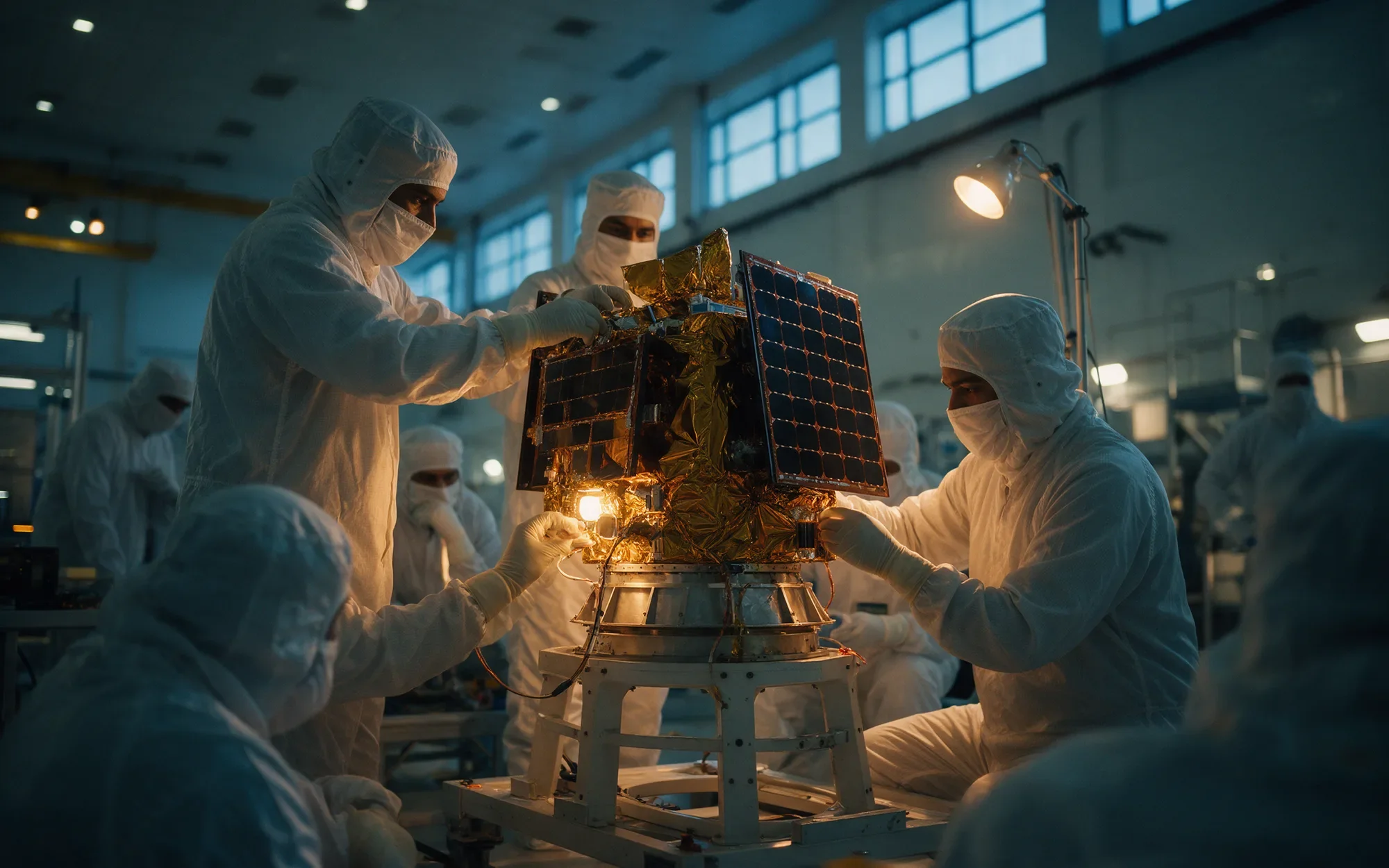
Today a visitor to the industrial suburbs of Bengaluru, Hyderabad or Chennai can walk through clean rooms where small teams assemble earth-observation satellites the size of a suitcase, test reusable engine parts printed in a single piece, or write the flight software for constellations that have not yet been launched. Most of these companies did not exist in 2016. Several now employ more than two hundred people.
From supplier to partner
For decades, private firms took part in the space programme mainly as suppliers. They machined parts, built subsystems to a specification and delivered them to a public agency that integrated, launched and operated everything. The reforms of the early 2020s opened the door to something different: private companies building, launching and operating complete systems of their own, with public facilities available to them on commercial terms.
The effect has been to turn a single customer into a market. A launch startup can rent test stands that once sat idle between government missions. A satellite company can buy launch slots, ground-station time and tracking services instead of building them. A downstream analytics firm can license imagery from several providers and sell crop forecasts or flood maps to banks, insurers and state governments.
“The hardest part used to be getting permission to try. Now the hardest part is the engineering, which is exactly how it should be.” — Ananya Rao, chief engineer at a Bengaluru launch startup (fictional, for this demo)
Founders describe the shift less as a sudden opening and more as a steady lowering of friction. Approvals that once took a year now take weeks. Rules on who may own and operate a satellite have been written down rather than negotiated case by case. And public engineers, many of whom spent careers inside the programme, have become advisers, mentors and, increasingly, employees of the startups themselves.
What the money is buying
Investment in Indian space companies is still small by global standards, but it has grown quickly and become more discerning. Early rounds funded ambitious slide decks; later rounds have gone to companies with flight heritage, paying customers or both. Investors now ask how many satellites a company has in orbit, how long they have survived and what fraction of the data they produce is actually sold.
That discipline is visible in how companies spend. Launch firms are concentrating on a single vehicle and flying it often, rather than designing a family of rockets on paper. Satellite builders are standardising buses so that one design can carry an optical camera, a radar payload or a communications package. Downstream companies are hiring agronomists, actuaries and urban planners alongside data scientists, because the customer wants an answer, not an image.
The export question
The next test is whether Indian companies can win business abroad. Cost has always been the country's calling card in space, and it remains a real advantage: engineering salaries, test facilities and launch prices are lower than in the United States or Europe. But cost alone does not win a contract for a constellation that must work for seven years. Reliability, delivery schedules and after-sales support matter just as much, and those are earned one mission at a time.
Several firms have already signed agreements with customers in Southeast Asia, the Middle East and Africa, often for small satellites or ground-segment services. The deals are modest, but they are the kind of reference customers that make the next sale easier.
Bottlenecks that remain
Not every obstacle has gone away. Testing capacity is still scarce, and companies sometimes wait months for a slot in a thermal-vacuum chamber. Specialised components, from radiation-tolerant chips to precision reaction wheels, are largely imported. And the talent pool, though deep, is being pulled in several directions at once by startups, the public programme and foreign firms opening engineering centres in India.
Insurance and liability rules are another unfinished piece. As more private satellites go up, questions about who pays when something goes wrong in orbit become less theoretical. Clear answers would lower the cost of capital for everyone in the sector.
The decade ahead
If the past ten years were about opening the door, the next ten will be about scale. That means rockets that fly every month rather than every quarter, satellite factories that build dozens of spacecraft a year, and downstream businesses whose customers do not think of themselves as buying space data at all. A farmer checking a soil-moisture alert on a phone, a shipping company rerouting around a storm and a city planning its drainage after a flood may all be relying on Indian satellites without knowing it.
That is perhaps the clearest sign of a maturing industry: when space stops being remarkable and starts being infrastructure. India is not there yet. But for the first time, the path from launch pad to everyday life runs through a crowded, competitive and very much private marketplace.